


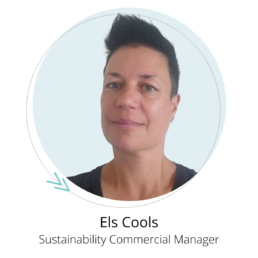
Biodegradability is often misunderstood in our industry. Many believe that all biodegradable products come from plants and trees—but is that really true? What’s the difference between “renewable” and “biodegradable”? To help you separate fact from fiction, our Ontex expert Els Cools, Sustainability Commercial Manager, shares insights on how Ontex uses renewable materials today and explores biodegradable alternatives for tomorrow.
Myth or truth? All biodegradable products are made from plants and trees.
Answer: Myth!
“Biodegradability isn’t limited to renewable materials like plants and trees,” explains Els Cools. “Some plastics made from petrochemicals can also biodegrade. For example, polyvinyl alcohol (PVOH)—the water-soluble film used in dishwasher tablets—is a petrochemical-based plastic that breaks down completely.”
What do these terms mean?
- Renewable: Materials that nature can replace quickly, like wood from trees. These are preferred because they regenerate fast.
- Biodegradable: Materials that micro-organisms (bacteria, fungi) break down into water, CO₂, methane, and biomass—leaving no trace behind.
How does Ontex use renewable materials?
Our diapers, sanitary pads, and incontinence products contain one renewable component: fluff pulp, made from softwood pine trees.
Why fluff? Because of its high absorbency, fast moisture distribution and soft and breathable characteristics. “We aim for 100% FSC (Forest Stewardship Council) or PEFC (Programme for the Endorsement of Forest Certification) certified forestry-based material,” says Els Cools. “In 2024, we reached 94%, up from our 2020 baseline.”
Looking ahead
Biodegradability and renewability are not the same, but both matter when designing products with a lower environmental impact. At Ontex, we continue to increase the share of certified renewable materials in our products while exploring biodegradable alternatives that meet performance and safety standards.
Innovation takes time, but every step counts. By combining science, sustainability, and transparency, we aim to offer solutions that care for people and the planet—today and tomorrow.